Two teapots, one made of copper and weighing 200 g, the other of china and weighing 300 g, both have a capacity of 500 g of water. Tea brews better, the higher the temperature of the water. Which teapot would produce a better brew, if it were possible to neglect surface cooling of the teapots, when the water is poured from the kettle into teapots at room temperature (20ºC approx.)? (The specific thermal capacity of copper is 0.095 and of china is 0.2.) How does it help to heat the teapot first with water from the kettle? Which teapot is better in fact, when the teapots are subject to surface cooling?
Text Solution
Verified by ExpertsCHECK THE SOLUTION.
Sol. Let m be the mass of the teapot, c the specific thermal capacity of the substance from which
the teapot is made, T 1 the temperature to which the teapot is heated when a mass M of water at temperature T is poured into it, and t the temperature of the room. We shall assume that the thermal capacity of the water remains constant and equal to unity throughout. Let us write down the equation of thermal balance:
Mc (T 1 – t) = M (T – T 1 ).
Hence, we find that
T 1 =  .
.
Substituting for all these values from the conditions of the problem, we find: for the copper teapot
T 1 = 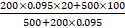 = 97ºC approx.
for the china teapot
T 1 = 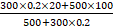 = 91.4ºC approx.
Thus, if there were no surface cooling, the copper teapot would be better for making tea. This result is mainly due to the high thermal capacity of china by comparison with that of copper.
If water from the kettle be poured into the teapot before making the tea, the teapot gets hotter and when water is poured into it the second time (for making the tea), it is hotter. As a result of its higher thermal capacity and its lower thermal conductivity the china teapot, when heated first, will grow cold less quickly than the copper one, and therefore in fact it is better.
Prepare Smarter with CGP Edu
Get practice questions, solutions, and test series in one place.
Write a Review
Share your experience with this question and solution.
Commentary
Send your comment, doubt, correction, or feedback to admin.
Similar Questions
Explore conceptually related problems